
Christmas is Coming...
November Wines 3
Climate change is not always detrimental, just look at England and Wales. Until a couple of generations ago it would have been foolhardy to expect proper grapes to ripen here, and it was certainly economically unviable. In the Mosel Valley, almost all vintages produce good wines now, rather than three times a decade, but some people would say they are no longer Mosel-like in character. In the Loire, climate change has meant more ripe, dry Chenin wines like Vouvray, but it has removed the attractive ‘zing’ from Sauvignon Blanc grown in Sancerre, Pouilly and Menetou Salon. One man’s heat is another man’s poison.
Another example would be Ribera del Duero in Castille. The vineyards are planted either side of the Duero at a dizzy average altitude of 837 metres. Vega Sicilia (pictured) started commercial production in 1864, but it was more than a century before a rival came along in the form of Pesquera. Ten years later there was a DOC. The next super-star, Pingus, arrived in 1995. By then the word was out that there was gold up those hills and more and more estates were launched, selling wines at often crazy prices to the plutocracy of Madrid and Mexico.
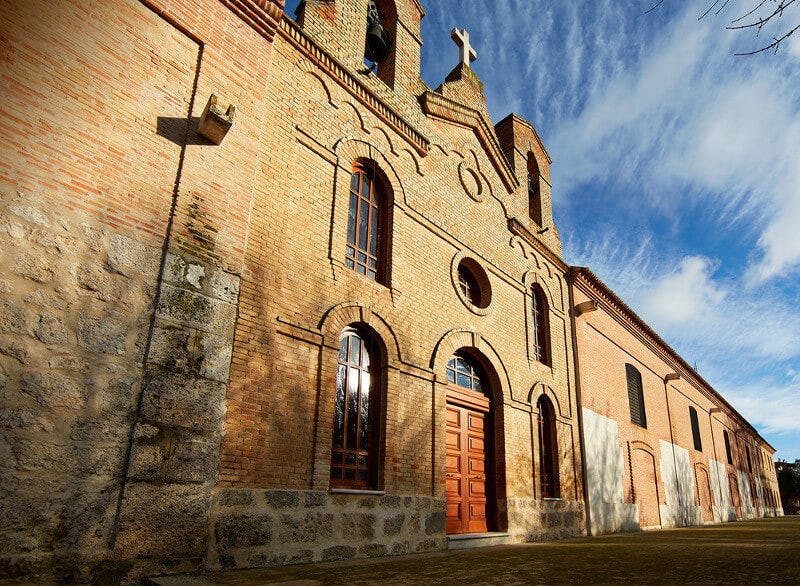
While I accept there are very good wines from the Ribera, tasting them can be an ordeal, as they are usually mouth-puckeringly tannic and you need to swill your mouth out with water about every fourth wine. Fortunately, there were some refreshing whites and rosés at strategic intervals, which allowed you to clean up your palate. My question is always: when does this wine become a pleasure to drink? Richard Grant of ARAEX, who lives and works in the region, still thinks a lot of the grapes harvested from the Ribera are unripe, and the tannins can be green and unforgiving.
Every year brave wine-writer Tim Atkin produces his list of the top 100 wines from Ribera del Duero. The first time I went I was recovering from Covid and I think I managed thirty. This time I set myself a target of 100, there were 171 wines in the tasting, and as it was alphabetical, I missed Vega Sicilia’s Unico Reserva Especial (for which Tim awarded 100 points). My top wines were the following: Arrocal Parcela Casablanca 2023, Bardos Viñedos de Altura 2023 (cheap), Bohórquez Reserva Especial 2009, Conde de San Cristobal Reserva Especial 2023, Cair Cuvée 2023 (very cheap), Pendón de la Aguilera 2023, La Capilla Anfira Rose 2024 (there were some stunning rosés), Finca las Dueñas 2021, Francisco Barona 2023, 45 Aniversario Gran Reserva 2019, Cuentaviñas Tinto Fino 2023, Thanos 2024, Ecosistéma Arcco – Reserva Especial 28 Meses 2020, El Majuelo del Abuelo – Clarete de Guarda – 13 Meses 2023 (another stunning rose made by combining red and white grapes), Monteabellón Finca Blanquera 2021, Gran Valtravieso 2020 and Valtravieso, Vino de Finca 2022.
Also very good were: Abadia San Quirce Trasconveto 2022, Ausàs Interpretación 2023, Rosalito 2024 (clarete/rosé), Tiempo 2022 (this is from Briego, one of the producers I visited on my only tasting trip to Ribera, 25 years ago), El Holgazán 2023 (cheap) and Carmelo Rodero Raza 2022.
The big Viña San Pedro winery in Chile has instigated a project involving the Mapuche people (pictured) in the Malleco Valley in the Araucanía Region. Mapuche means ‘people of the land’. They are the most populous indigenous community in the country. Each family was given 2.5 hectares of vineyard to farm. There are now eleven plots totalling 27.5 hectares of Pinot Noir planted on east-facing granitic soil about 40 kms from the Pacific Ocean. The grapes are taken to Maipo for vinification. The project was initiated in 2015, so the vines are still quite young.
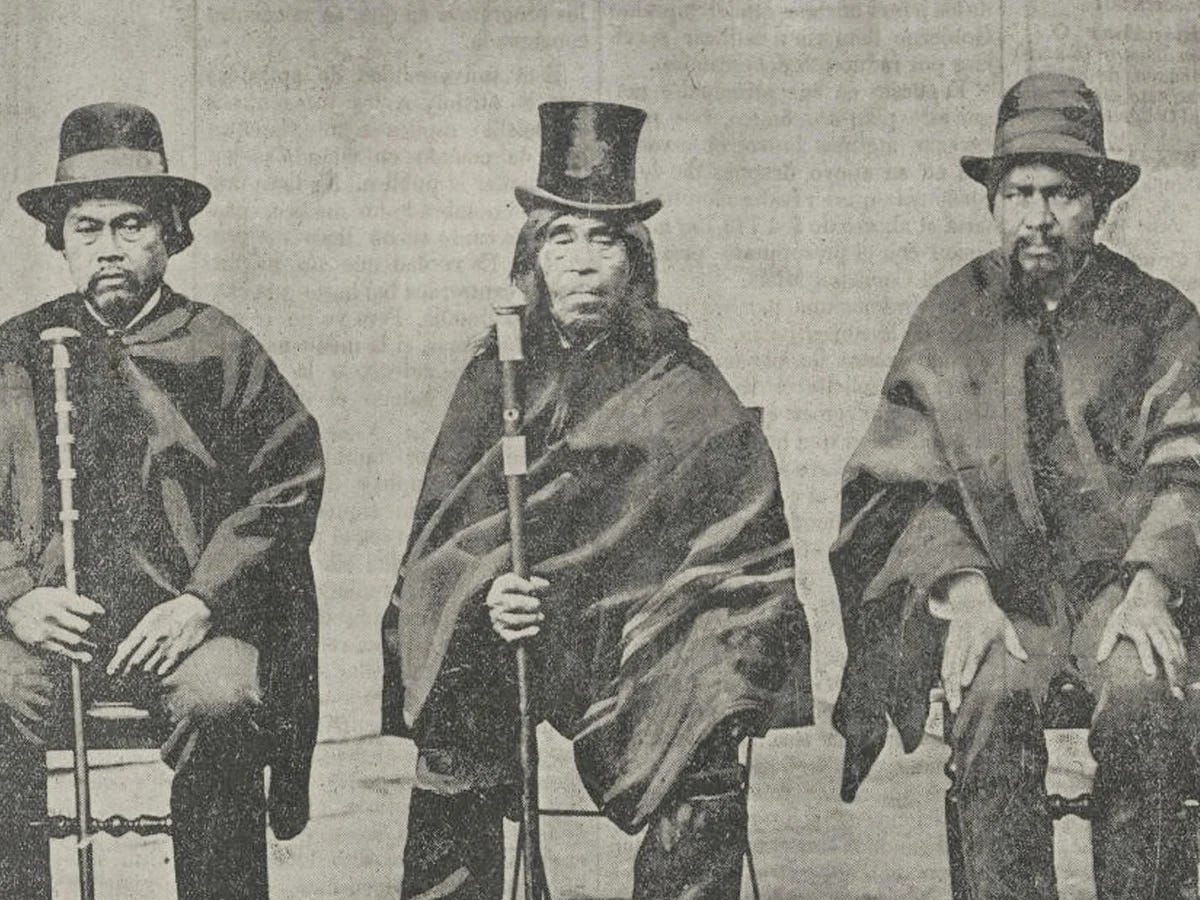
They have red fruit character and are quite linear, not the richer style of Pinot Noir familiar from Burgundy. Of course, once the vines are mature that could change a little. The least successful vintage was 2021. The two that pleased me the most were the 2020 and 2022. Both were characterised by good length and colour but the 2022 had a spicier note and a little taste of chocolate that I liked.
Perhaps the biggest surprise of the year came from the Cyprus tasting. I live in a part of London colonised by Greek Cypriots after the war. Most have moved north to more suburban Wood Green or Arnos Grove, but they still own a great deal of property here and I buy my sausages from Cypriot George and have my hair cut by Cypriot Michael (or his mother), my dry cleaning is done by Cypriot cleaners, my shoe repairs by a Cypriot cobbler called Achilles. They all speak ten to the dozen (mostly about their hatred of Turks), but none of them has ever told me about Cypriot wine.
When I was young Cyprus was famous for Emva Cream sweet sherry which was advertised by a man with a fruity timbre on the television at Christmas. There are still delicious sweet Commandaria wines that come from the western tip of Cyprus which were shown at the tasting. The real joy, however, was chiefly the whites, grown at between 1,000 and 1,400 metres in the mountainous centre of the western end of the island (pictured). They are wonderfully pure, bracingly fresh wines chiefly made from indigenous grape varieties.
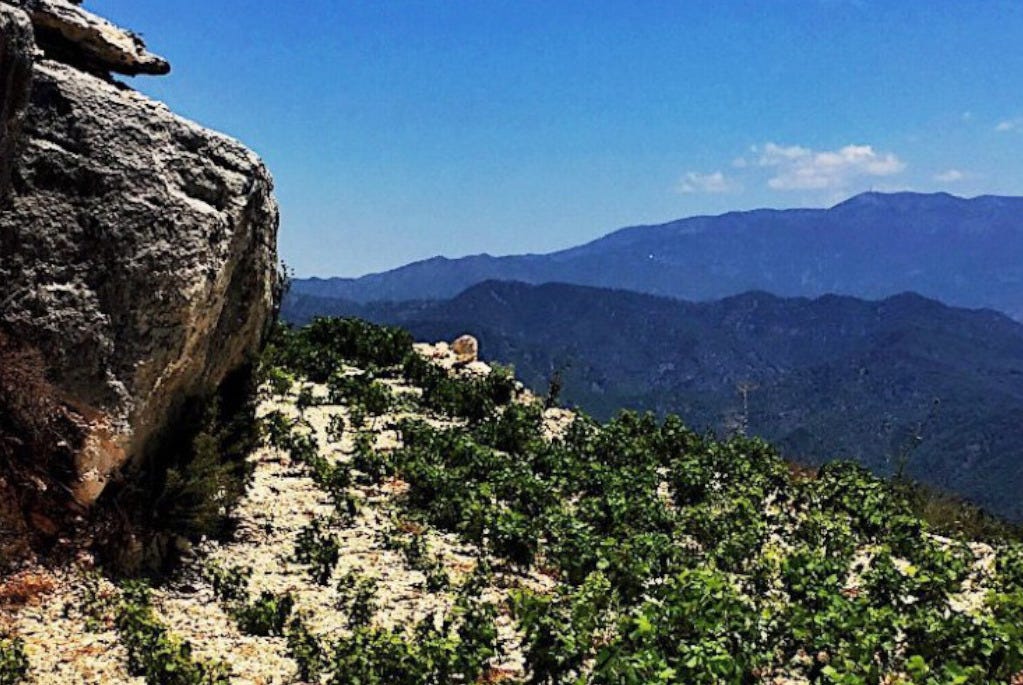
From Dafermou (650 – 1,200 metres) were excellent wines such as the 2024 Paparouna (a fresh blend of Xinisteri, Malaga, Assyrtiko and Malvasia) and the 2023 Yiannoudi made from the eponymous indigenous grape which was startlingly fresh and aromatic. K&K Vasilikon also had a very good 2024 Xinisteri. Kyperounda grows grapes at between 1,200 and 1,400 metres. Anatoli is pure Xinisteri and made in an amphora. The lively, fruity Alma is a red made from the native black grape Maretheftiko. Best was the 2024 Petritis reminiscent of gooseberries. Makarounas makes a wine from 100% Spourtiko which is just 10.5 alcohol - a lovely dry white and a good, light Maratheftiko red brimming with fruit. Mallia comes from KEO, the big boys on the island. They make a super Maratheftiko (2018), almost in the Cabernet style with a pronounced mintiness, a cold-fermented, lemony Xinisteri as well as a Commandaria tasting of lemons and figs. Oenou Yi had a gorgeous lemony Vasilissa grown at 1.100 metres. Tsiakkas makes a bigger red Porfyros from Mavro, Syrah and Grenache tasting a little like a Beaujolais, while Vlassides goes for a heftier (15%) international style with its red Artion made from Merlot, Syrah and Cabernet Sauvignon. Vouni Panayia makes the Woman in the Wine Press from the rare white Morokanella, again citrussy. Zambartas might have been my favourite for its 2024 Promara white and its 2023 Maratheftiko red. Xinisteri is also used to make the Commandaria at Evangelou.
Lastly a seasonal wine. We always drink Amarone at Christmas, specifically on New Year’s Eve with our zampone and lentils (pictured). It is made by fermenting sugar-rich semi-dried mostly Corvina grapes. The result is highly alcoholic (good proof against winter cold) and spicy, which makes it a boon companion for other seasonal foods, but some Amarone is really quite sweet as well, I assume either because the producer doesn’t want it to be too alcoholic and therefore leaves some residual sugar, or because the wine itself refuses to budge because the yeast has been killed off by the alcohol. Sweet wines might be better served with a blue cheese like Gorgonzola. Its high strength is all part of the legend in Italy, where (I am told) they say you should drink it sitting on your bed, that way when the wine knocks you out, you don’t have far to fall.
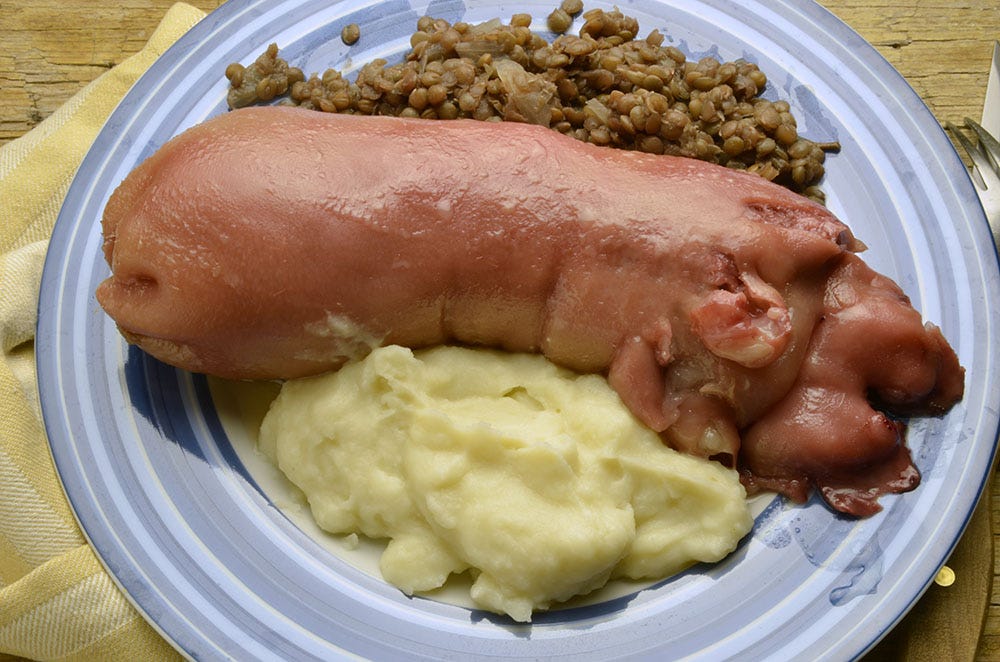
So, my top wines from the sommeliers’ tasting under the magnificent Elizabethan double hammer-beam roof of Middle Temple Hall: the stunningly spicy 2022 Ca de Rocchi, the truffly 2013 Morar from Valentina Cubi, 2018 Villa Canestrari Plenum and the 2011 Riserva – the first truffly but a bit sweet, the latter spicy morello cherries, then the luscious, liquorice and black fruit 2013 Le Guaite de Noemi, the 2017 Riserva from Tenuta Falezza – chocolate, raisins and cherries, the toast and morello cherry-like Corte Figaretto, the truffly but quite sweet 2015 Tenuta Vignega, the balsamic 2018 Bottega and possibly the best of the lot, the cooling, truffly 2016 Cecilia Beretta. That’s what I want for Christmas.
Correction to my article: The wine from San Pedro is called 'Tayu 1865'.
Actually called Tayu 865. This is the cheapest: https://cantinaedenoteca.com/products/san-pedro-tayu-pinot-noir-2024-1?variant=51712664961361&country=GB¤cy=GBP&utm_medium=product_sync&utm_source=google&utm_content=sag_organic&utm_campaign=sag_organic&gad_source=1&gad_campaignid=23161646319&gbraid=0AAAABBk0u4UuuRei1EVTHeGdoOs_66AgE&gclid=CjwKCAiAl-_JBhBjEiwAn3rN7QxnENBhDR2QF7rRO6cf07TpFD1mMk7_zH0mXQX4x_IxEdQ7qftqwRoCSfwQAvD_BwE