
The Lot Revisited

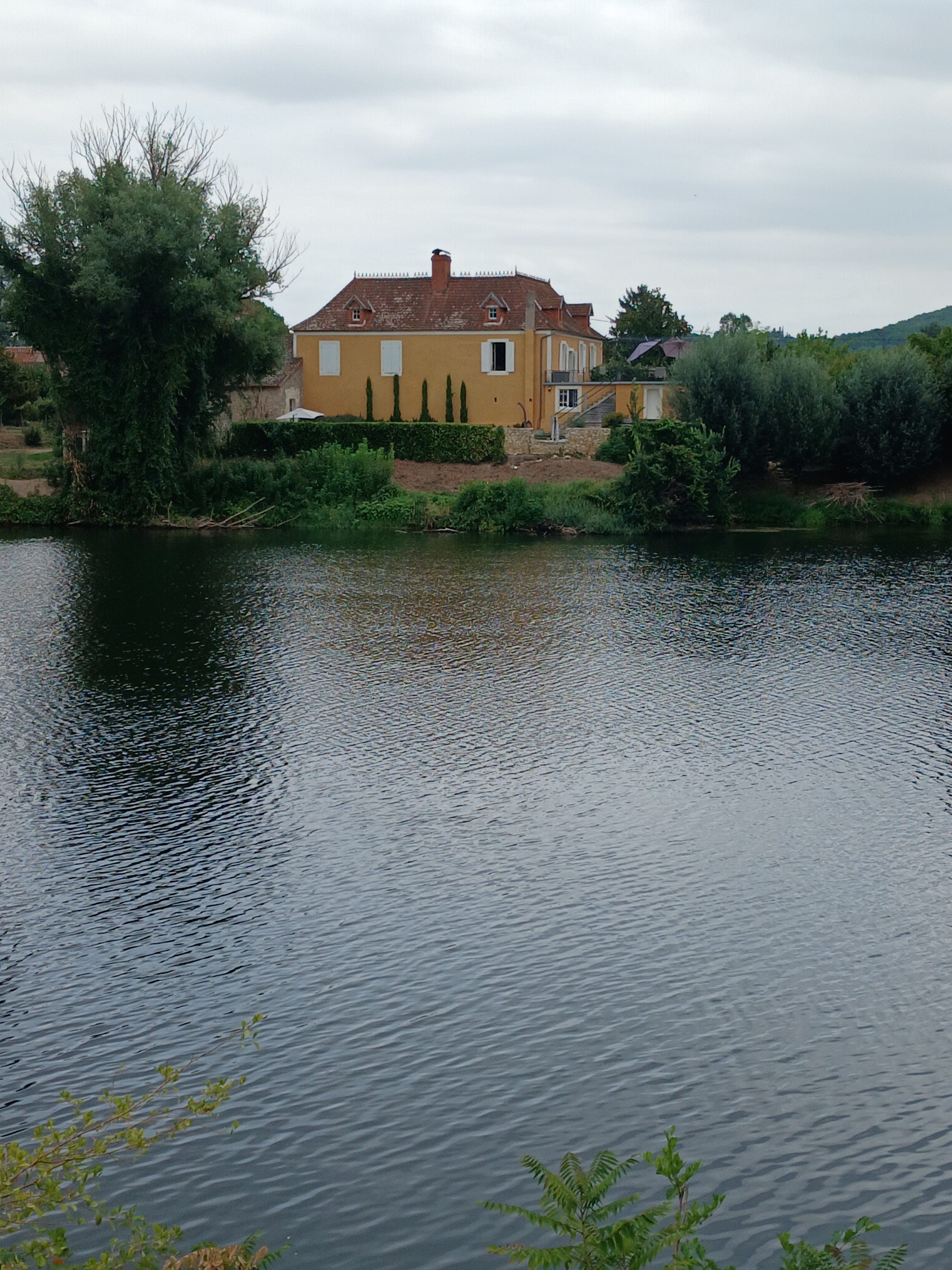
After nearly three months of a quasi-sedentary existence, the time had come to stretch my legs and spend a week in the Lot. It is a part of France I know a bit, both because of the wines of Cahors and from having stayed in a friend’s house there a few times fifteen or twenty years ago. Memories of those trips remain bitter-sweet. She lived in the elegant chauffeur’s cottage on the edge of a beautifully manicured estate in Soturac, in the far west of the département. It centred on a copybook mediaeval castle, built no doubt to extract money from boats laden with Cahors wine travelling down the Lot to the Garonne and on to Bordeaux. From Bordeaux it was shipped to thirsty drinkers in northern Europe, at a time when the wines of Cahors were particularly esteemed.
My children were still small then. My son possibly as young as four the first time we went. I remember thinking I’d lost them both on a hot and crowded Metro crossing Paris to the Gare de Montparnasse, but when the crowd thinned out, they were fortunately still there. The great problem was the terrible paucity of amenities in rural France. There was naturally shopping to be done. Sometimes another kind friend gave us a lift to a supermarket, but she was very old and not always available. The railway line had been taken up decades ago and only the pretty stations remained. The bus was chiefly a myth. On one occasion we waited an hour and a half before giving up. There were a couple of shops four kilometres to the west, but on market days we walked on to Fumel, some seven kilometres away under the blazing summer sun. My son was entrusted with two litres of water and there were scheduled stops to drink – like stations of the cross.
On one occasion we had flown to the run-down aerodrome at Bergerac and stayed the night in the town before taking a train (a change allowed us to dash into a supermarket and stock up) to Monsempron-Libos. The bus had knocked off for the day and the town’s two taxis were both Bordeaux-bound taking invalids to hospital appointments. With our cases we could not have made it on foot. Que faire? Just as I was beginning to despair a large car drew up and a man wound down his window to ask if he could help. I explained the problem. ‘Montez! Je vous rends service,’ he said. The car was scattered with Hebrew texts. We chatted on the way to Soturac. He was a great friend of one of Charlie Chaplin’s sons, possibly Michael? He dropped us at our door. I took his number to invite him over but idiotically mislaid it. He had been astonishingly kind.
This time, once again, we landed at Bergerac. Little had changed except Brexit had worked its magic and there was a long queue to fingerprint the non-Europeans. I joined a shorter file largely formed of outraged British residents. My brother-in-law was waiting behind some barbed wire, giving the place the impression of a POW-camp. This time there were no hitches, but it is still impossible to get round the region without a car - the gilets-jaunes had a legitimate grievance. We were staying in a house five kilometres from Prayssac, but there wasn’t even a baker in the village. It was easier to buy wine from the local estate than bread or milk.
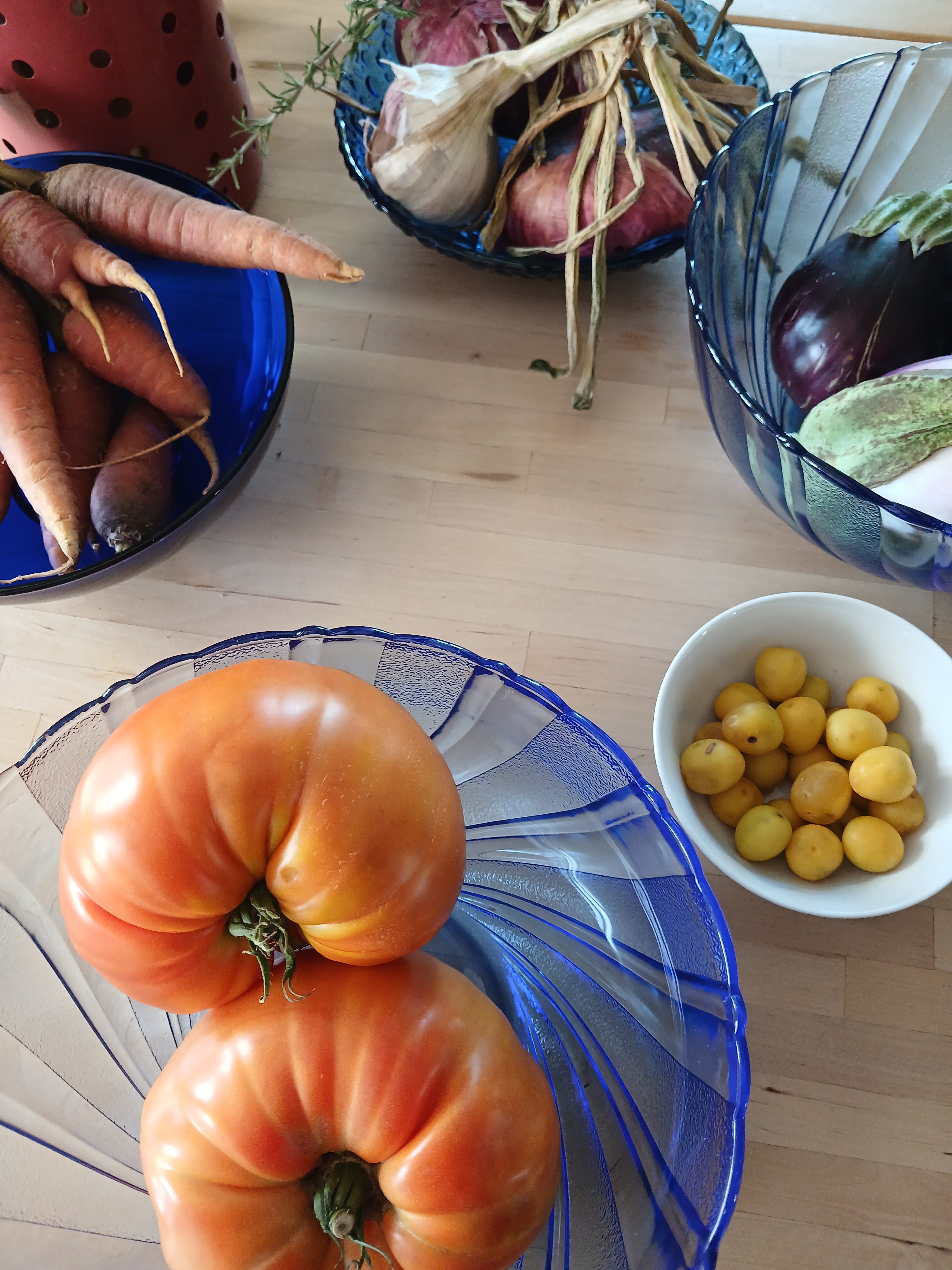
As is often the case, the joy of la France profonde lies in the weekly markets. Prayssac was one of the best. The stalls are ranged around the bulbous neo-gothic church. There were plenty of local producers, a man sold excellent fresh ewes-milk cheeses, another just white peaches. It was melon-time with stack upon stack of green-skinned Charentais. There were also stalls sporting huge Marmande tomatoes and semi-dried local prunes. Another man had a hard, two-year-old ewe with a wonderfully persistent nutty tang. We went home to a summer lunch of melon and local ham and our fresh ewes’ cheeses with a Marmande-tomato salad with basil. That night we ate in the Vietnamese restaurant in Prayssac, wrapping nems in lettuce and mint and dipping them in the vinegary sauce as we had done decades before in Paris when Vietnamese restaurants were just about everywhere.
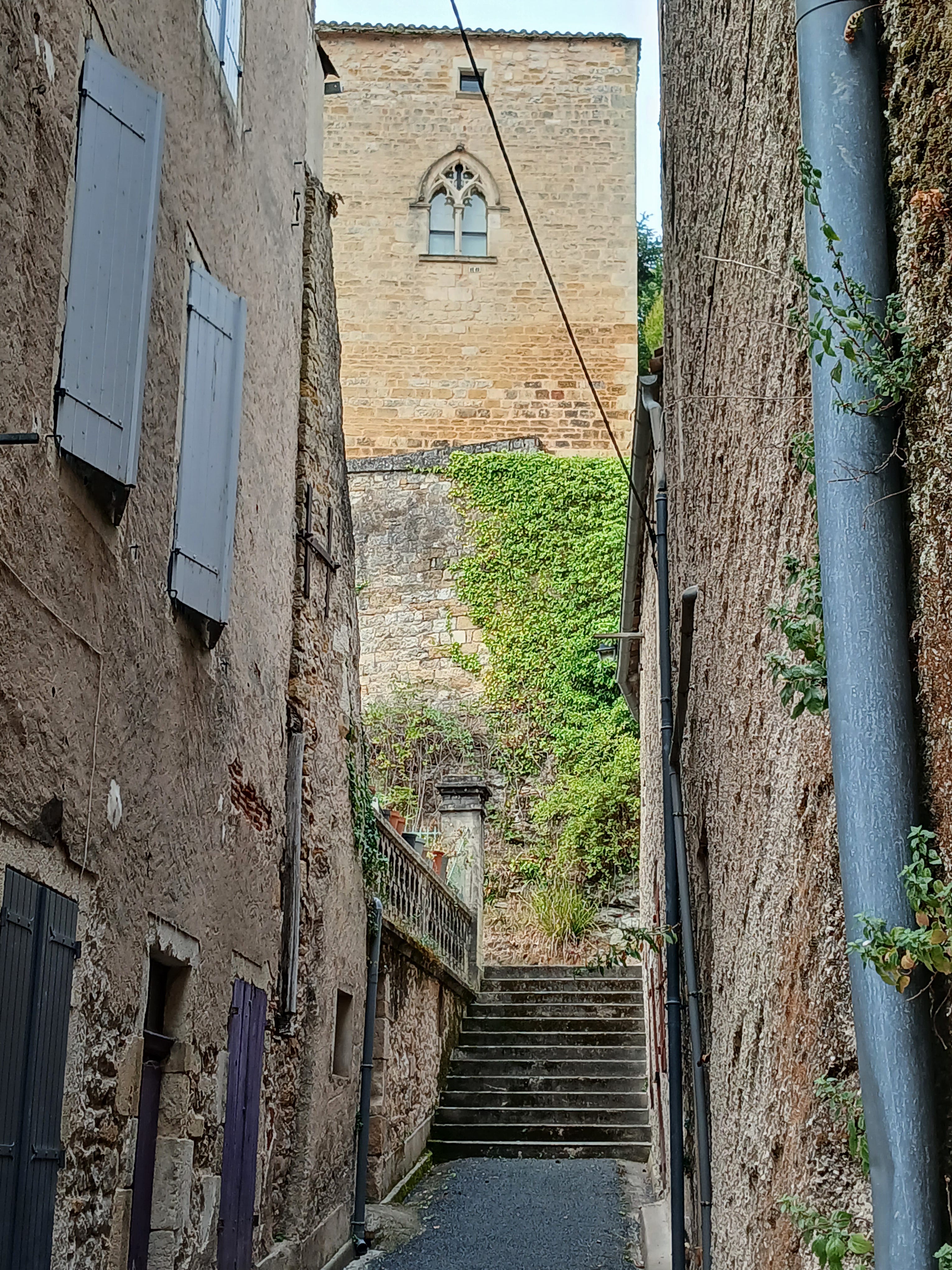
We also went to the market at Puy-l’Evêque, a ravishing small mediaeval town. I had been before with my children on a day when the buses were miraculously performing. It seemed a bigger affair then, when the town bustled and many local businesses were owned by resident Britons. Brexit and Covid appear to have deflated Puy l’Evêque, which is now reduced to three cafés, two or three restaurants and two bakers. There is a Dutch shop mind you, selling biscuits and mass-produced cakes, but sadly no old gouda cheese, sausages or smoked eels.
We ate well at home. A rabbit I bought in Prayssac I braised in two thirds of a bottle of 2014 Château Guadet in St Emilion that I found abandoned in the kitchen. It gave the rabbit a magnificent colour and taste. One night we drove up into the hills to the restaurant La Récréation in Les Arcques which has just three tasting menus combining classic French cooking with flourishes culled from elsewhere. I had a little bowl of gazpacho, some scallops on crunchy nests of angels’ hair pasta flavoured with passion fruit, a sort of sausage of de-boned guinea fowl thighs with crunchy polenta, a piece of Cabécou goats’ milk cheese with local honey and a magnificent white tropical chocolate egg filled with mango mousse and passion fruit. We drank a white from Le Cèdre and the 2014 red from the same estate.
One afternoon we ventured up the hill to the nearby Clos de Gamot which was offering only the fine prune-and-chocolate like 2023 vintage to taste. The estate is famous for its collection of old vintages, which go back to 1989, although they come at a steepish price. The nearest estate was the Château de Fantou down by the river, which made a couple of good white IGPs as well. There is no appellation for white Cahors.
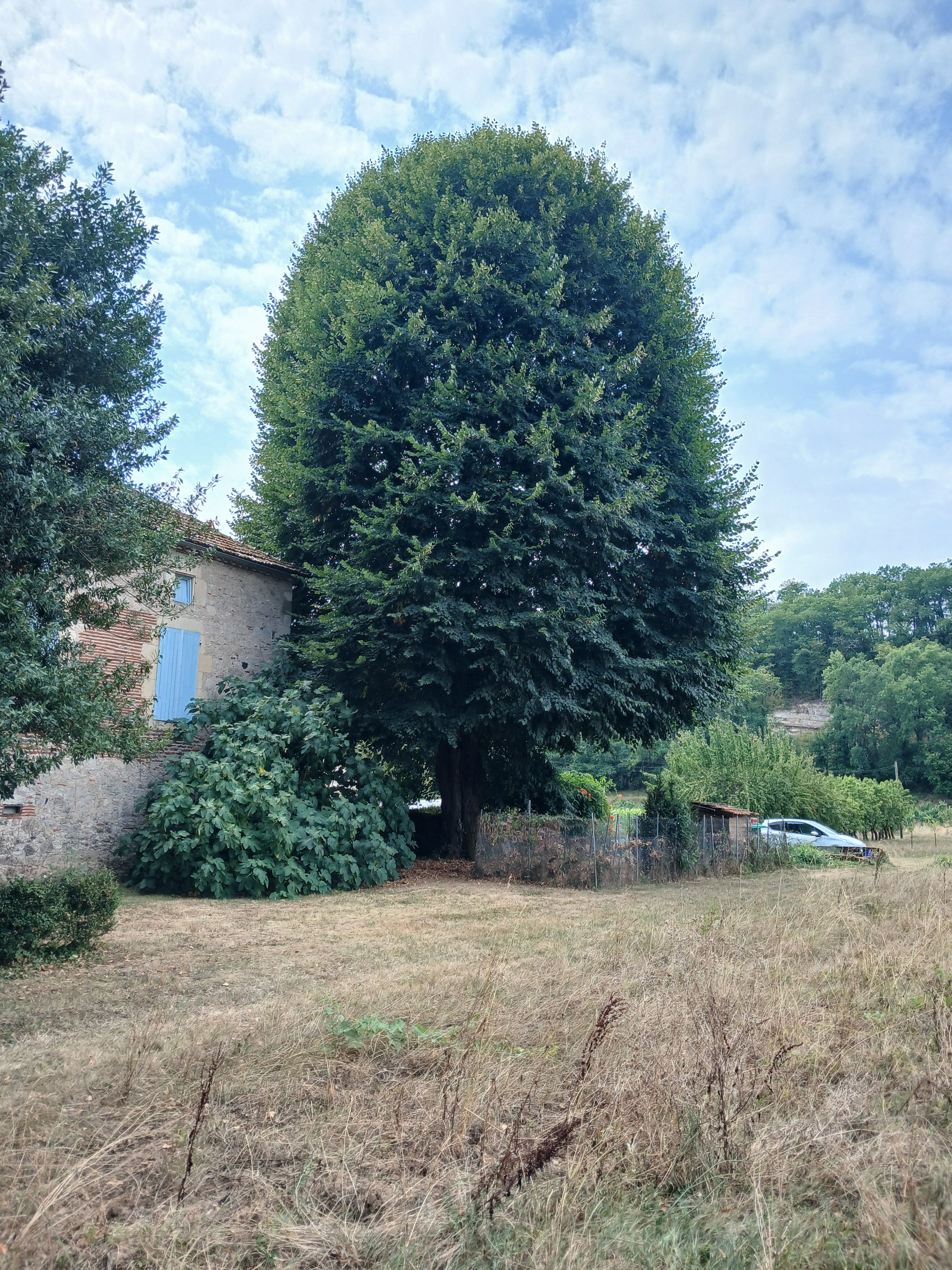
The owner, Aurélie talked at length about the history of wine in the village. Her great-grandfather had bought the land in 1875 when phylloxera was destroying the vines. Before disaster struck, the wines were shipped to Bordeaux from the little port at Castelfranc. The ‘black’ Cahors wines, so popular in Northern Europe and Russia were made on the steep hills, but after the wine blight, production mostly shifted to the alluvial riverbanks, and was not as good. The man who set the ball running to revive Cahors was Alain Dominique Perrin of the jewellers Cartier in Paris. Perrin acquired Château Lagrazette in 1980 and created the single-vineyard Le Pigeonnier with the famous oenologist, the late Michel Rolland, providing the impetus for many other growers to move their vines back to the hills and concentrate on making 100-percent Malbec again.
Back in 2007, I wrote an article on Cahors for the Italian magazine Slow Food. The promotions people set up a tasting of a dozen modern-style single-vineyard or top cuvée wines for me in Cahors and drove me round to various estates afterwards. My top marks went to Lou Prince from the Domaine du Prince, Haute Collection from Château Eugénie, La Métairie, La Cuvée d’Exception from Château Croix de Mayne, Le Pigeonnier, Eulalie from Château de Cenac, Elite from Château Combelle-la-Serre, Quintessence from Château Le Rigalets, Divin from Château la Croisille, L’Eclat from Château la Coustarelle, le Chevalier de Malacoste from Château Camp del Saltre and La Tour Saint Sernin from Château Saint Sernin.
These top cuvées are not always to everyone’s taste. Sometimes the cheaper, more traditional wines are particularly rewarding. Any list now would include Château du Cèdre, Clos Triguedina and Cahors westernmost wine, Château Lamartine in Soturac.
On Sunday we attended mass in Albas. The church was rammed full as it was the fête de village. In the front pew stood a truly ancient combatant holding a flag. After mass, a brass band played the Marseillaise. We explored the little town where the houses appeared sprung from rocks. One narrow lane was called ‘la vennelle de Pissaille’: all too clear what went on there after dark.
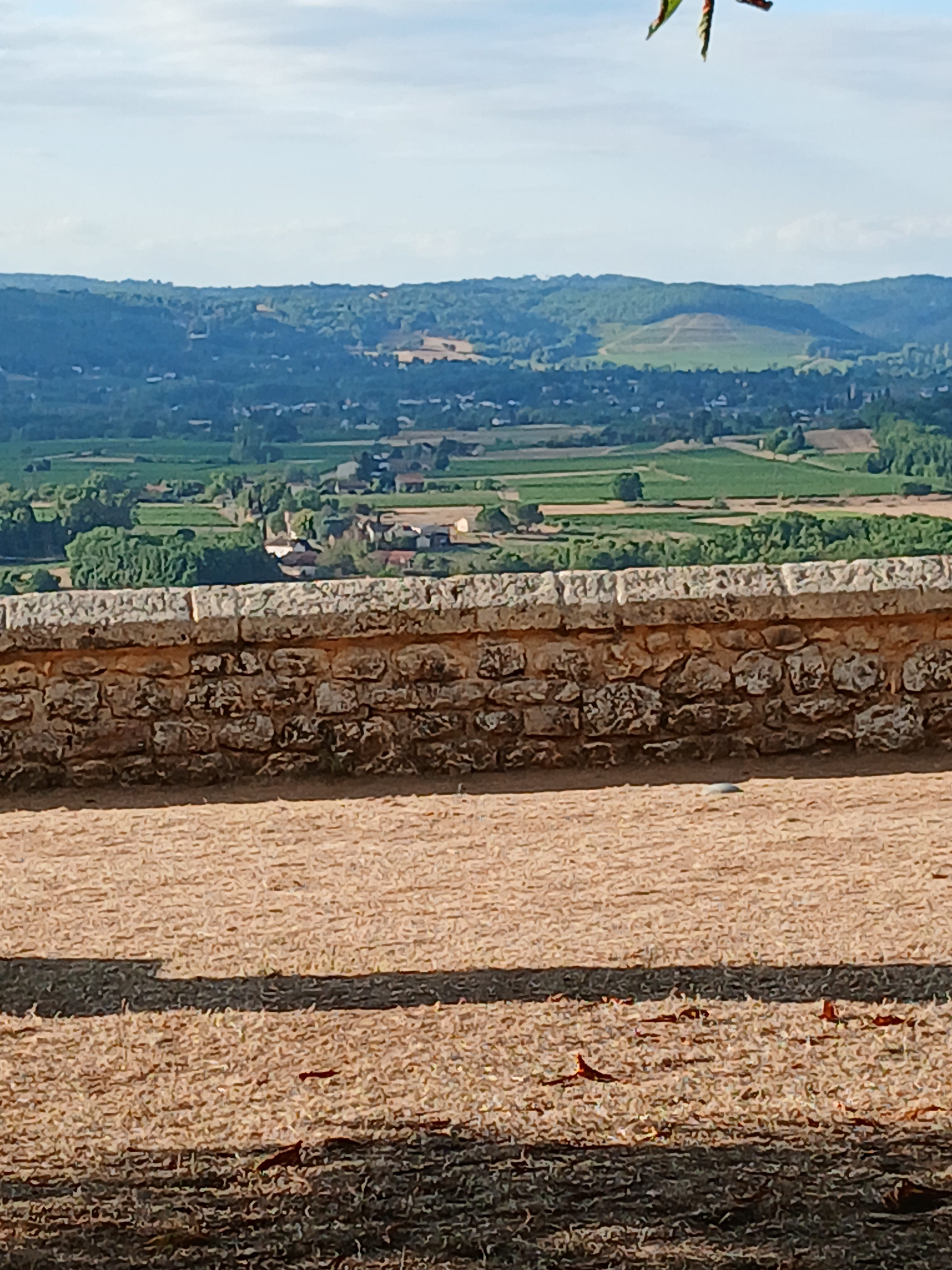
On our last night we drove up to Bélaye in the hills nearby to a beer-bar with a tremendous view of the Lot Valley. Below us stretched out the vines that still cling to the alluvial lands beside the river, but in the distance, we could see a modern estate seemingly carved out of the forest on the limestone hills like a beacon for the future of Cahors, but with the miserable state of wine in France today, it is not certain whether many will continue to follow that star.
No one seems to buy it? Bordeaux and other regions are in crisis. It seems to be a life-style choice, but it is not France as I knew it.
I came straight to the comments to ask the same question. So are you saying the wine is still good, but that wine sales in general are down, therefore making the vineyards unprofitable?