
Wagner or Mozart?
April Wines

Like Christmas, Easter is a time when the family comes together, and it furnishes an excuse to drink nice wine. There was Easter Sunday itself, then my birthday tumbled in just after on Easter Monday, when we sat through five hours of Siegfried at Covent Garden before a late schnitzel dinner (schnitzels are the perfect post-opera supper – they can be prepared in advance and take no time to cook).
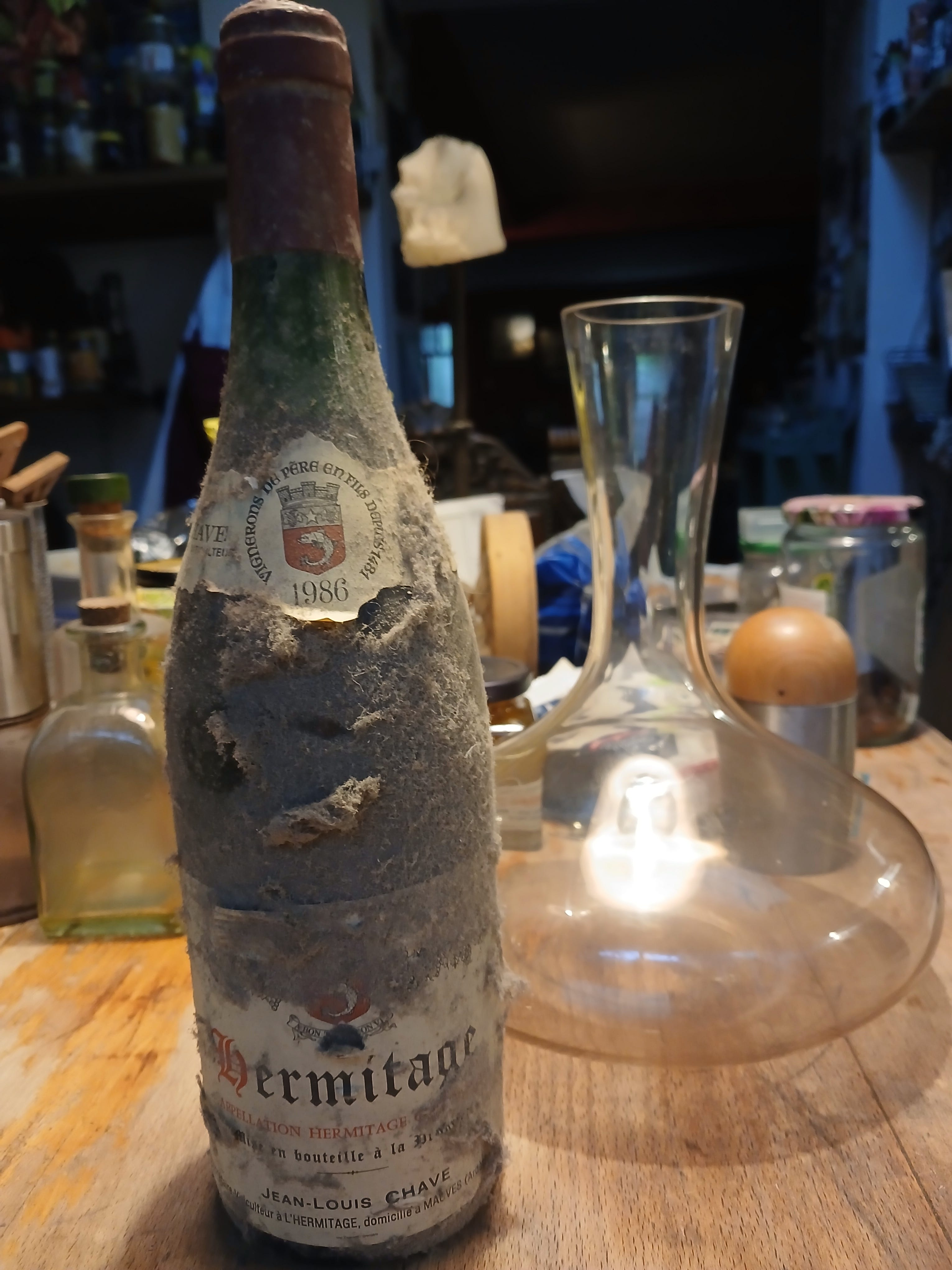
As far as wine was concerned, the biggest treat was on Sunday, when I opened one of my last two bottles of 1986 Chave Hermitage with the Paschal lamb. This simply exuded class in the guise of balance and acidity, and a paste-like fruit that refused to leave the palate, resurfacing in wave after wave. I have no idea whether Gérard’s son Jean-Louis makes wine like this (his prices are way out of my league) but it is nice to remember the self-effacing Gérard through his wine.
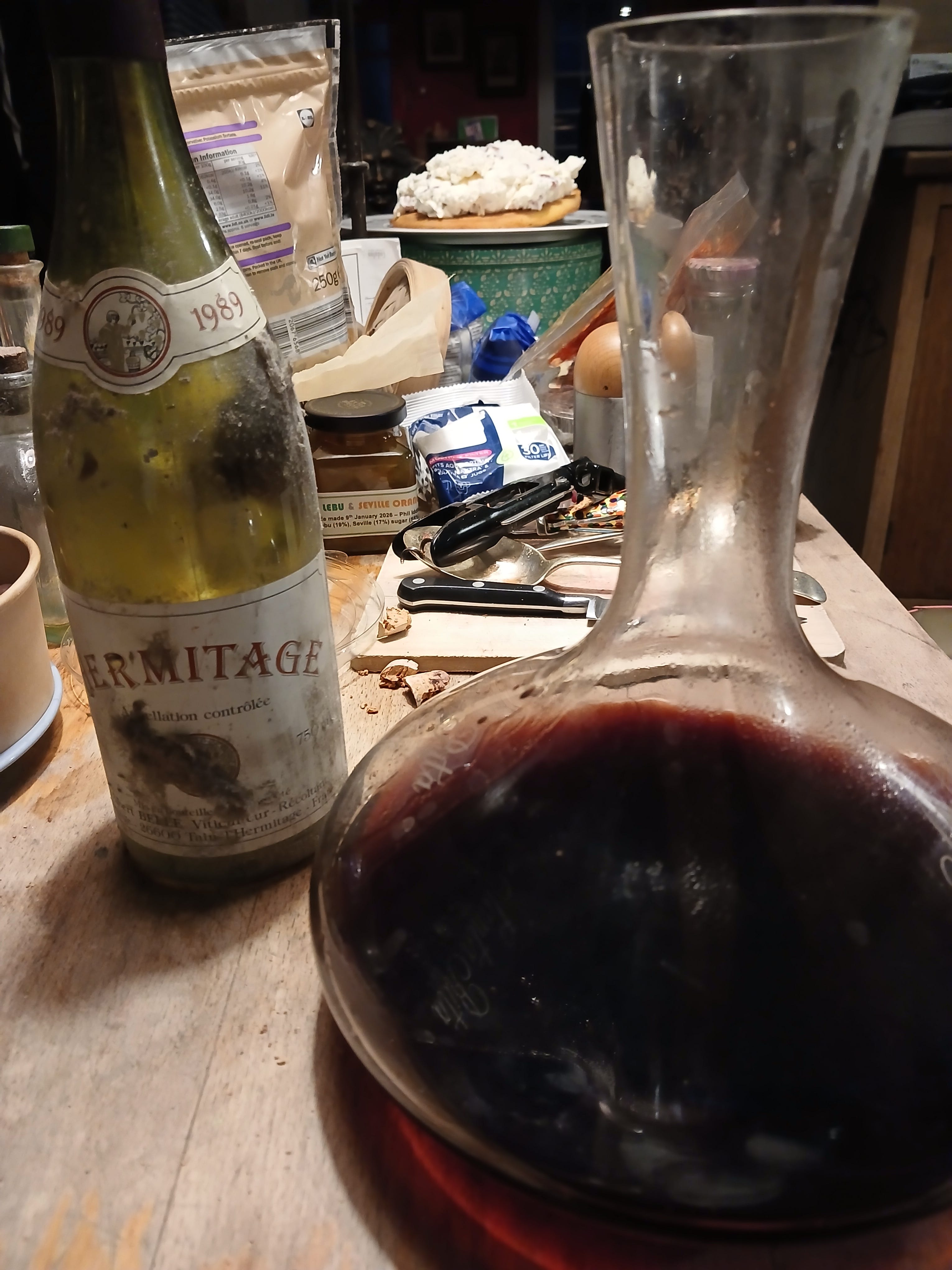
On the Monday we had another Hermitage, this time a 1989 from Albert Belle. It was a better vintage than 1986, but Belle’s wine was more one dimensional, if undented by age, it was a great dark glass of morello cherries, very fine, very elegant, more Mozart than Wagner.
Champagne was drunk both days: an old Mumm ‘demi-sec’ with lemon meringue ice on Easter Sunday and a Wine Society brut (it has been supplied by Alfred Gratien since before the Second World War) after the Wagner on Monday.
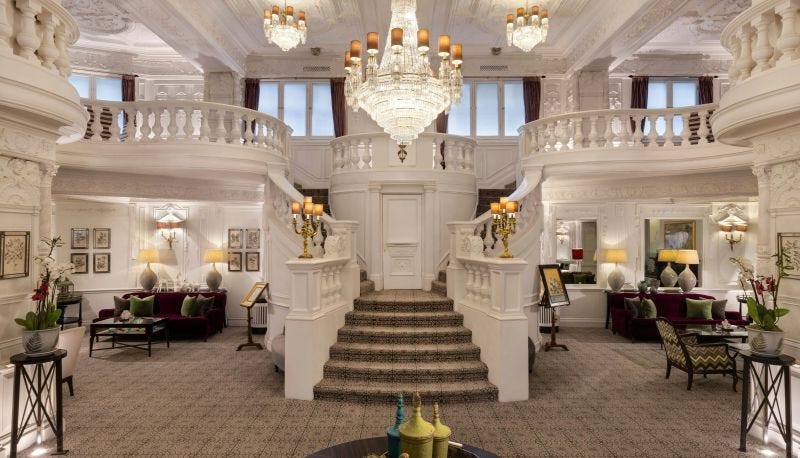
And no, we didn’t serve an English champagne-style wine. Yes, it is true they have got a lot better (as a direct result of climate change) but there is still room for improvement. At the opening of a new terrace at the charming, largely unspoiled St Ermin’s Hotel in Westminster, I was able to taste both brut and rosé from Louis Pommery, the Reims-based champagne house’s English venture. They have planted the same grapes and their chalky soil is much the same: it ducks under the Channel, popping up again on the Mountain just south of Reims.
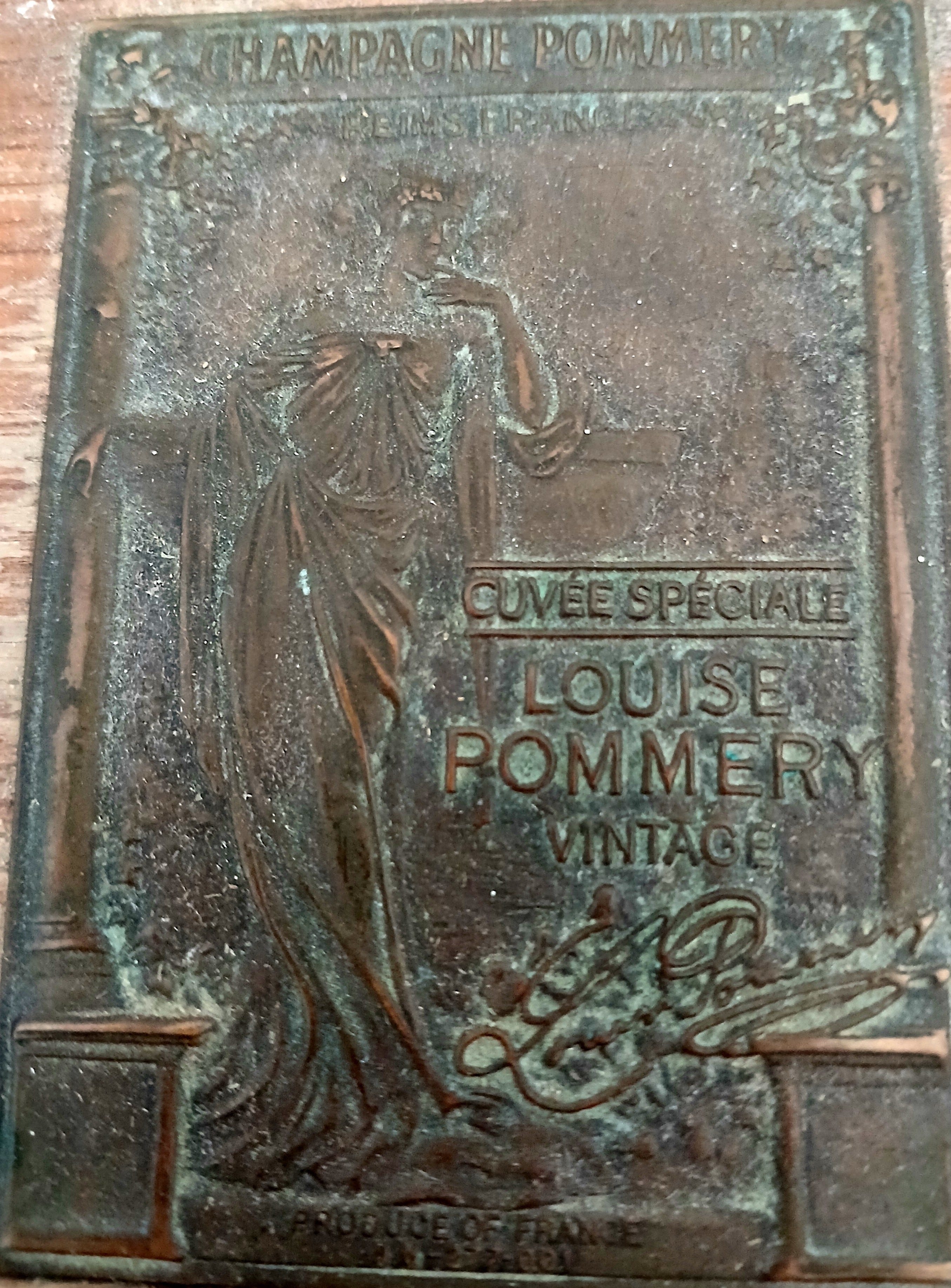
Will Perkins, Pommery’s English winemaker maintained that, with time, the English sparkling wine might supersede the French one. Rising temperatures in Champagne mean harvests are taking place earlier and earlier and the potential alcohol is getting dangerously high for a wine that should not exceed 12 ABV. For champagne, elegance is all. Although it is warmer in Hampshire than it was, it is still relatively cool, helped, I suppose by coastal breezes blowing up towards the Downs.
English sparkling wine also benefits from the fiscal incentives enshrined in Borage and Sushi’s spiteful 2023 rejigging of the excise bands for wines and spirits. Stronger red wines, however, are slammed with much higher duties to the degree that I am told that British importers now beg their suppliers to bring down alcohol levels if possible. The taste of good wine, however, is determined by ripe grapes, and different grapes ripen with different potential alcohol levels. Beaujolais’ Gamay, or the Loire’s Cabernet Franc, are delightful at 12 percent. A properly Wagnerian Rhone-Valley Grenache, on the other hand, needs 14, and a southern Italian Nero d’Avola (more Verdi) about the same.
Not so long ago, we had the ‘Ambleri’ from Cantine Ermes in Sicily. It said it was 13 ABV. It was sweet. I suspect the fermentation had been stopped early, to slip it into Britain without paying our outrageous levies. The cheaper wines will be the ones they denature most so that they might bring them in at the lowest price points. Providing you have the money to pay, you can still get decent wine in Britain, but once again it’s ‘the poor what gets the pain.’
Amelia Jukes put on the latest of her excellent Australian wine tastings in Soho on the 20th, in this instance, Riesling and Semillon. Both grapes have a long history in Australia, Riesling above all in ‘German’ South Australia and Semillion in the Hunter Valley in New South Wales. Climatically, the Clare Valley couldn’t be more different to the Mosel or the Rheingau. For a start, its bloody hot and Riesling grapes’ skins are sometimes seven times as thick as they are in the Mosel. Naturally that will mean different flavours, and yet it is still very recognisably Riesling. Also, Clare Valley Riesling and Hunter Valley Semillon are quite old-fashioned wines: light in alcohol and sparing with oak.
In the Barossa, there is a crisis caused by chronic drought. There is no water for irrigation and grapes don’t fetch much money on the market. This would particularly affect companies like Peter Lehmann which relies on a loyal coterie of growers for grapes.
So, Riesling first – the honours must go to Grosset and the Clare Valley. The 2025 Springvale needs time. It is fresh and understated. Grosset’s Polish Hill is cool, lemony and long. It is austere for now, tightly built, but will be delightful. High praise for Rieslingfreak in South Australia for its zingy, lemony 2025 No 33 Riesling; Mount Horrocks 2024 Watervale is a classic, with its lime aroma, the 2023 is earthier; Henschke’s 2025 Julius from the Eden Valley is rich but the acidity is spot on; in the Barossa the 2024 St Andrews from Wakefield in Clare is as dry as a bone, like biting into a green apple; Chaffey Bros 2023 Triplepunkt from the Eden Valley has a bit more residual sugar and an agreeable length; the 2025 Pikes Hills and Valleys Riesling is off-dry and slightly earthy. It actually tastes quite German.
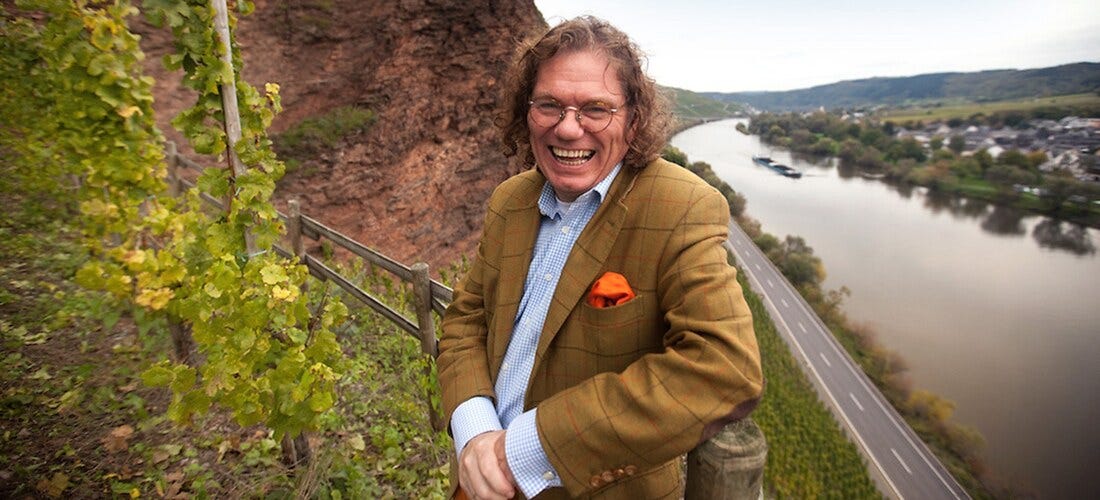
Talking of Germans, the ubiquitous Ernst Loosen is on the loose in the Clare Valley where he makes an atypical Loosen Barry from 47-year-old vines. In Great Southern – out west, the lyrical Larry Cherubino makes a predictably good Riesling for Robert Oatley, even if it is not as long as some. His own wine – Cherubino 2023 Ouvo from Frankland River – is better: long and lemony. I hope the Royal Opera House will place an order?
The 2024 Harewood Porongurup Riesling is also worth a punt. It is grown at 600 metres and ripe and well-structured.
The 2024 Jasper Hill from Heathcote in Victoria is another wine with a long track record. It is quite individual - earthy with some caramel on the palate and really good structure and acidity – one of Australia’s best.
And then Semillon: Tyrrell’s is the place to start: the 2019 Pokolbin Hills is made from 56-year-old vines and is everything an Australian Semillon should be – long, pure, low in alcohol, untrammelled by oak; the 2019 Vat One is made from 103-year-old vines and has more concentration and length. Brokenwood challenges Tyrrells for the crown with its 2017 ILR Semillon. There is nice lime fruit and proper purity, It is at its best now.
Most of the classic wines are to some extent a footnote to Tyrrell’s Vat One, but Torbreck’s Woodcutter is made from vines which might be 150-years-old and the Barossa style is not dictated by the Hunter Valley. The 2024 is earthy and full. The 2024 Kaesler is another excellent Barossa Old Vine Semillon with lots of dried apricot-like fruit. Also from the Barossa is Alkina, a fatter wine, tasting of pears. It sings too, but then ‘Alcina’ is another opera, by Handel.
Very robust, as if it was made yesterday and yet I had probably had it for 20 years. Not sure the lemon ice was perfect with it.
Always a delight to read your wine notes, Giles. How old was the Mumm Demi-sec as a matter of interest?