
Light Reading
Getting over an operation

Nearly seven weeks ago, I underwent four hours of abdominal surgery. I remember little of the operation. After being introduced to a robot (‘Mr Robottom’) who was going to do the work, a nice anaesthetist asked me what a historian did; then, there was a tussle with a canula and I lapsed into unconsciousness. When I woke in a hospital bed, I reached straight for a book.
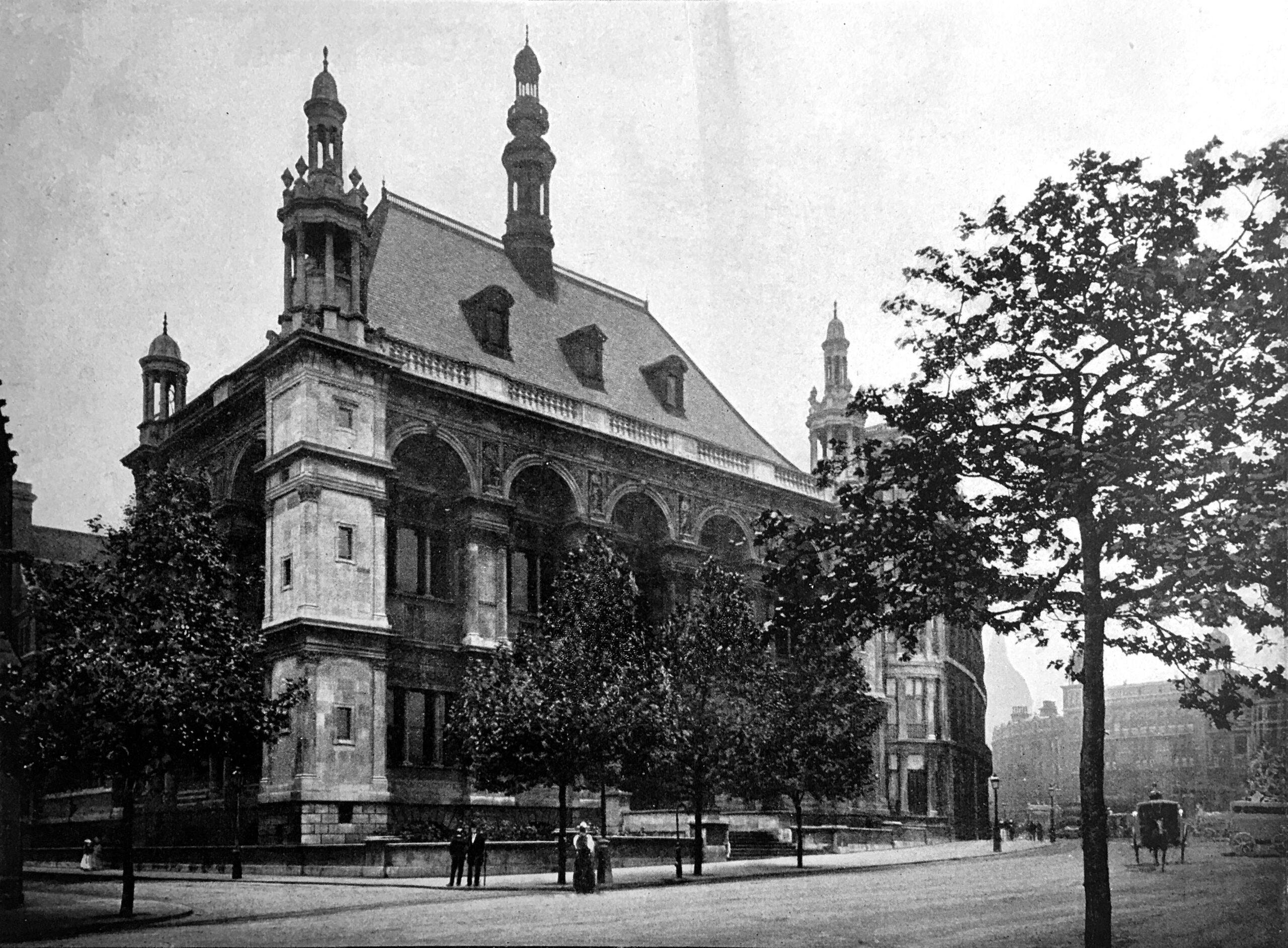
I had taken two for my one-night stay, both by Julian Barnes. I read my first Barnes in April, recommended to me by Robin Barrow, a dear friend and former schoolmaster who thought I’d like him. I had always resisted reading Barnes, possibly because he lives nearby. He is a very noticeable man, immensely tall with a long nose. You see him on the Heath, in food shops or waiting for the tube. One local butcher told me that his nose had grown longer over the years he’d known him. That I couldn’t vouchsafe, but I do remember once being a Hatchard’s Author of the Year (those were the days) and watching him come in, walk round the ground floor of the shop twice with his nose in the air, then stride straight out. He spoke to no one.
People say he’s shy.
Robin may have recommended Barnes because he had been at my school, albeit a good decade before me, where Robin had taught me English and later political philosophy; and it’s true that in two Barnes books I have noticed this world of leafy suburbs that had been the habitat of about ninety percent of my fellow pupils. In The Sense of an Ending, he even names some of the masters, including the Head of History, Joe Hunt, who was still there in my day, but retired before it fell to him to teach me A-Level.
Barnes has an older brother, Jonathan, who is an Aristotelian philosopher. He too was striking, both for his long blond plait and the perilously tight shorts he wore when he coached the Oriel eight.
I was terribly impressed by The Sense of an Ending, a brilliantly constructed book, and expected to like my hospital reading too. Between naps and painkillers, I made some headway with The Noise of Time, a ‘novel’ about Shostakovich, which took the composer to task for his pusillanimity vis-à-vis the Soviet regime. Living in dictatorships is a subject I too have explored in Nazi Germany, and I felt Barnes overly unsympathetic: Shostakovich’s voice is in his music. The Eighth String Quartet, with the OGPU hammering on the door in the last movement, seems to say it all.
I got home the next day in periodic pain and constant discomfort and slumped down in a low chair in my study with a pile of pills. It took me a while to finish the book. Then I read The Only Story where I recognised the same themes of suburban boys and older women, but liked it less than The Sense of an Ending. Meanwhile a new pile was growing at my right elbow, of books put there by my family, above all to prevent me collapsing into self-pity or dejection. I pushed aside Grimmelshausen’s Simplicissimus and a couple of proof review copies, and dug in. First up was Muriel Spark’s Girls of Slender Means which had some good period detail of London in 1945, but was disappointingly light and rather ‘sub’ Evelyn Waugh.
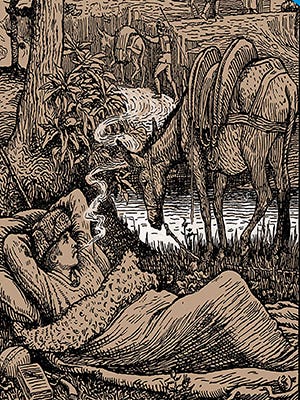
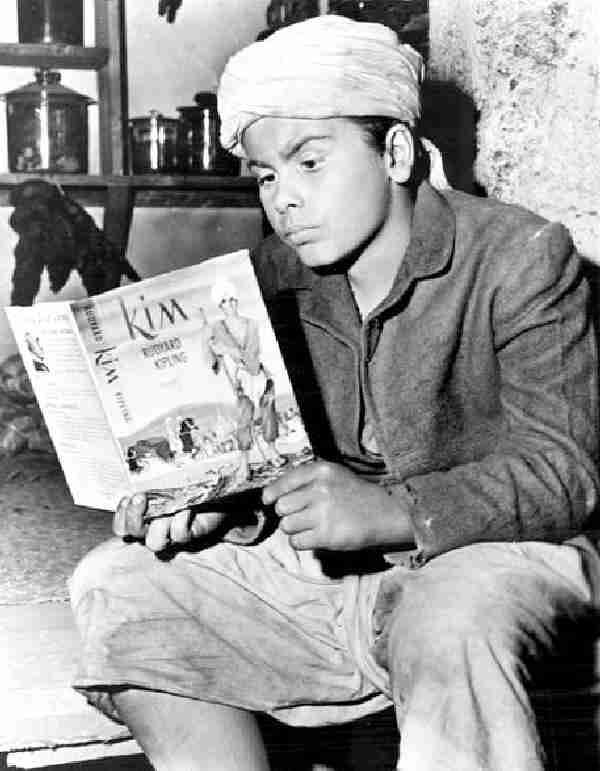
Robert Louis Stevenson’s Travels with a Donkey in the Cévennes was something I had always wanted to read, a model travel book, with plenty of history and an affectionate portrait of the ass Modestine. The next book was another I had never got round to reading: Kipling’s Kim. The volume came padded with cordons sanitaires. Yes, of course, Kipling was an imperialist, an unabashed white suprematist; but without any special knowledge, it strikes me that Kim is a tribute to the India Kipling knew as a boy and again as a youth; and he loves that India warts ‘n all. Kim has no time for the ICS, the gymkhana, La Martinière, even the British Army; tanned, blacked-up or simply dirty, he passes for an Indian and revels in the pungency of Indian life. It is significant, perhaps, that this book was almost Kipling’s last utterance on India before he put the matter behind him to become the voice of empire.
After Kipling, I went back to Stevenson, reading a volume of short stories including Jekyll and Hyde and the Body-Snatchers.
Two more modern works followed: J G Ballard’s Empire of the Sun and Seumas Deane’s Reading in the Dark. Both were proper tours de force, both impressive in their stunning use of English. The Empire of the Sun almost wore me out, however, in its relentless description of blood and death. I was reminded of a project I toyed with once for an annales-type book on everyday life in the concentration camps. They have many common denominators. My daughter had studied Deane’s book for an Irish literature paper at TCD, it was about the Troubles in Derry, dealing with the skeletons in an Irish family closet, and brought home the grimness of the lives of Northern Irish Catholics at the tail end of the Presbyterian ascendancy. It should be added that both these books drew very closely on their author’s personal experiences.
Roald Dahl’s Danny Champion of the World might suggest a decline from the sublime to the ridiculous, but I enjoy Dahl, only this one lacked some of the espièglerie I found in Dahl’s other children’s books.
Then my first C P Snow: The Masters, which to my surprise I found quite gripping. Oxford and Cambridge colleges have changed almost out of all recognition since the thirties, but one thing seems to have remained: the bitchy, snide attitudes of many of the tutorial fellows. The book is modelled on Christ’s Cambridge. The scale is tiny, with only a dozen or so dons on the foundation and undergraduates scarcely get a look-in. There is an insularity about them, which must have gone, but it was still recognisable in the seventies when the vast majority of Oxford dons were Oxford men and women. I enjoyed an insightful appendix explaining the history of the university, noting the subtle but important differences between the two places.
Barnes returned with Arthur and George, again a documentary, this time about the unlikely convergence of Arthur Conan Doyle and George Edalji, a half-Parsee solicitor who became the victim of provincial racialism and suffered the most appalling persecution until the inventor of Sherlock Holmes took up his cause. The book is wonderfully moving, and I felt a lot more successful than The Noise of Time.
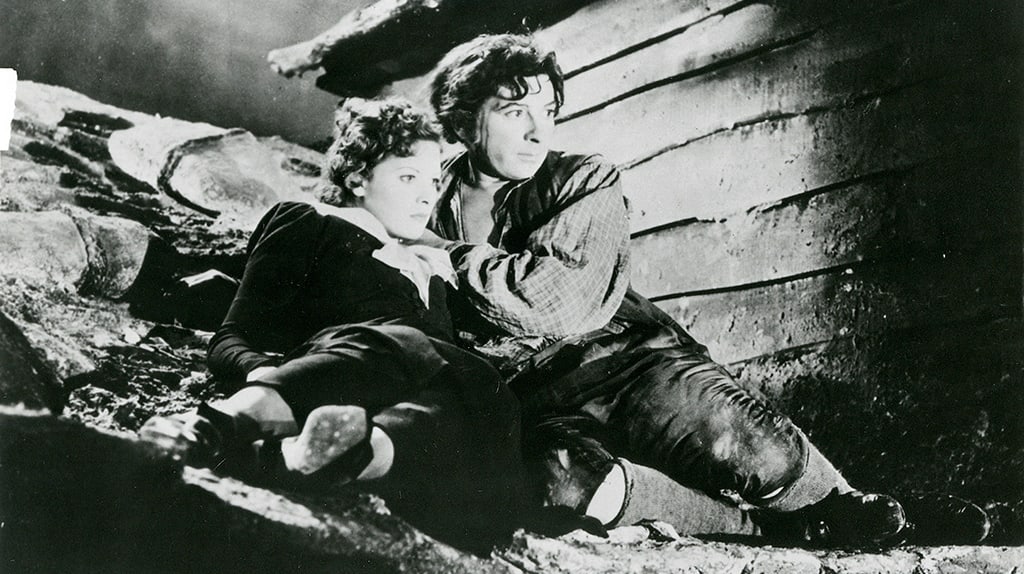
It was now time for a gothic novel and Daphne du Maurier’s Jamaica Inn. It is a tremendous read and almost as gory as The Empire of the Sun. It was not the first of her books I’d read. Several decades ago, a friend promised to take me to stay with her aunt, Daphne du Maurier and I read Rebecca in preparation, but then at the last moment the visit was cancelled. I also read a volume of her short stories, many of which, like Don’t Look Now, had a central spiritualist element, which reminded me that Conan Doyle had also been a keen subscriber – something I had learned from Julian Barnes.
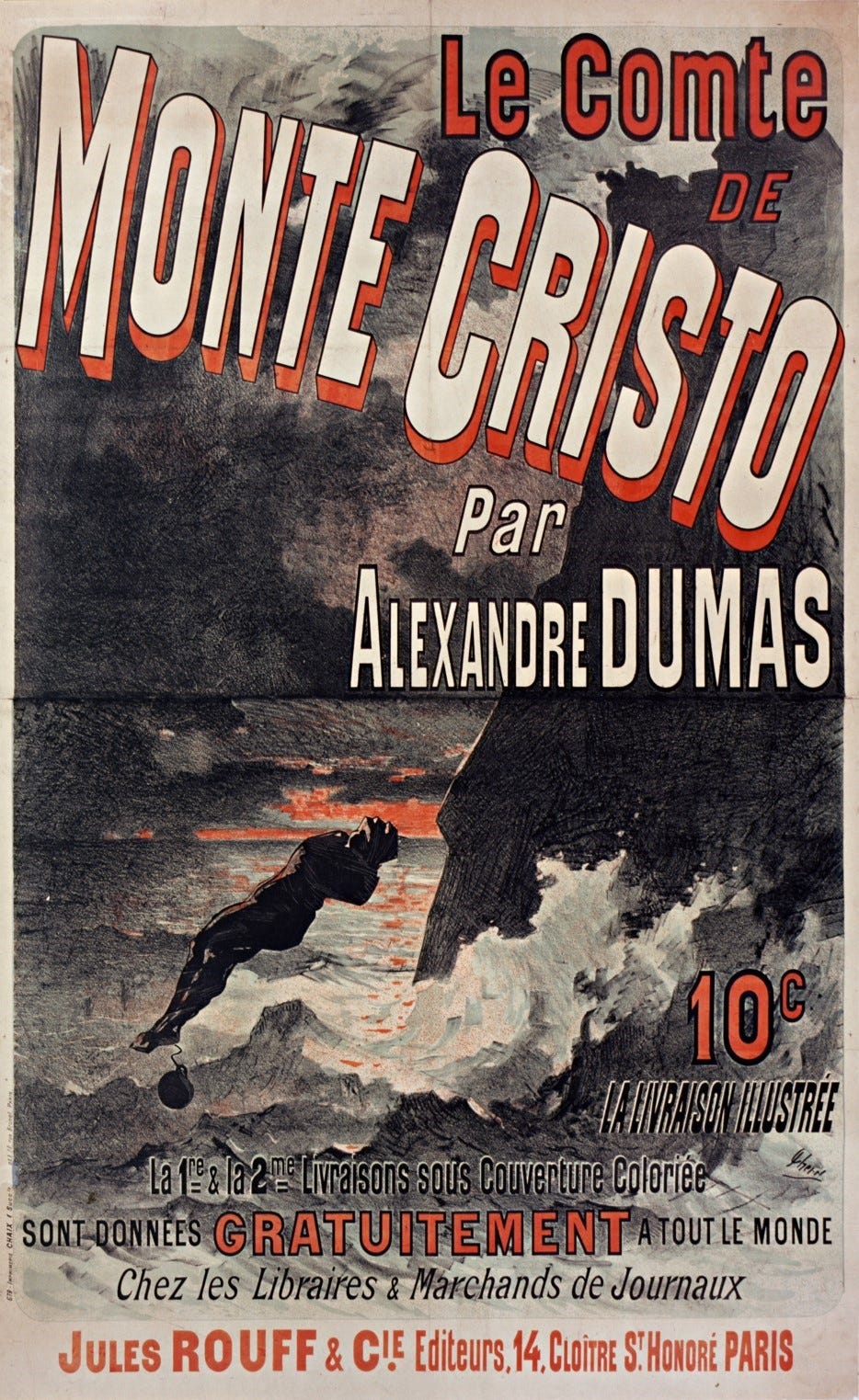
Between the two Daphne du Mauriers my son slipped in J L Carr’s Month in the Country, a lovely, short pastoral. This was a breather before the biggest book of my convalescence: Le comte de Monte-Cristo. It was the first volume, drawn from my daughter’s shelves. Once I had read the opening pages I quickly ordered the second. I have a Bulgarian political scientist friend who swears by Dumas, and now I see why. The first, and possibly the last 350 pages of the massive 1,400-page novel are the best, as they really draw you into the story. There is much in the middle (although redolent with information on many things – particularly on food and drink) which might be seen as self-indulgent now.
Nancy Mitford’s Don’t Tell Alfred was a bit of a come-down after Dumas. I hadn’t read the previous volumes which would have introduced me to the characters, although I detected a few Mitfords, and found it a rather flat comedy. It is a roman à clef. I think I recognised the veteran Evening Standard Paris correspondent Sam White in Amyas Mockbar, the father of my friend Michel Smith
Herman Melville’s novella Bartleby made up for it: a quirky little story set in nineteenth century New York that had a slightly Kafka-like feel to it. This I followed up with V S Naipaul’s hard-hitting Guerillas, a very gruesome account of nasty people in Trinidad, but once again, a cheering testament to the fact that good English is not dead, or at least, it was still alive in the seventies.
And that brings me back to Dumas: I ordered the two volumes of Les trois mousquetaires, and am already half way through the first. It is great fun, but not a patch on Monte-Cristo. The pain has largely subsided, but my travails are sadly not yet over. I still value anything that can take my mind off them.
Zeus preserve us, sorry to hear of surgery and hope all is going well. Some of my old favorites on that list.
Take as much time as you need to recover...or even more so that you can share your reading. A joy to follow...until...J